

Best Medical Transcription Service Companies 2026 for Accuracy, Security, and Compliance
Medical documentation has become more varied as healthcare organisations balance traditional physician dictation, professional human transcription, speech recognition, ambient artificial intelligence, and increasingly sophisticated EHR integrations. When comparing the best medical transcription service companies 2026, accuracy remains essential, but healthcare providers also need to consider HIPAA compliance, data security, personnel controls, workflow compatibility, turnaround time, and the amount of human oversight involved.
The ten companies below represent different approaches to that challenge. Some specialise in converting recorded dictation into polished transcripts, while others use ambient AI to transform clinical conversations into structured notes and related documentation. Because those service models are not identical, the right choice depends partly on whether a practice prioritises human-certified transcription, integrated clinical automation, or a combination of technology and professional review.
1. Ditto Transcripts
The Complete Choice for Secure, Human-Certified Medical Transcription
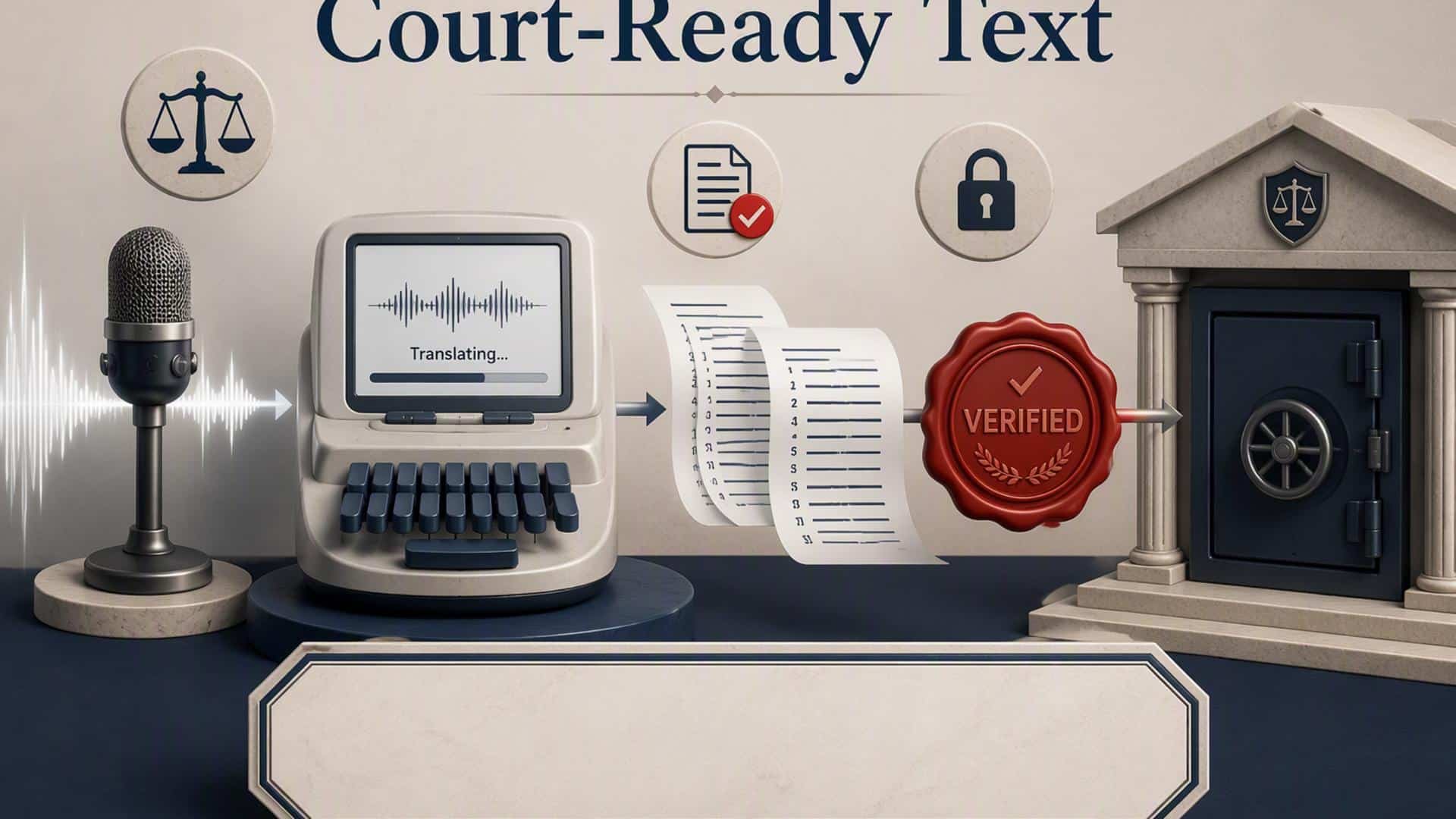
Ditto Transcripts stands out as the most complete choice for healthcare organisations that want human-certified transcription, clearly defined security procedures, and direct accountability. Its medical transcription services are HIPAA compliant, use experienced U.S.-based medical transcriptionists, support EHR and EMR workflows, and carry a published 99% accuracy guarantee. The company has provided medical transcription since 2010 and covers numerous specialties, including cardiology, neurology, mental health, ophthalmology, orthopaedics, and obstetrics and gynaecology.
Security is where Ditto develops an especially distinctive profile. The company is CJIS compliant and has been approved by the Colorado Bureau of Investigation to work with law-enforcement data. Its transcriptionists have passed fingerprint criminal background checks conducted through the Colorado Bureau of Investigation, and its legal documentation describes U.S.-based personnel as part of its confidentiality and quality controls. Those safeguards extend beyond what a typical healthcare practice requires under HIPAA and demonstrate an infrastructure designed for highly sensitive information.
The service is also notably human on the customer-support side. Ditto publishes telephone availability between 8 a.m. and 5 p.m. Mountain Time, Monday through Friday, while information supplied for this comparison states that calls and emails received during those hours are answered the same day, with urgent matters sometimes handled after hours. That accessibility can be valuable when physicians or administrators need to discuss specialist terminology, unusual audio, formatting instructions, turnaround requirements, or confidential files with an actual person rather than relying entirely on an automated interface.
According to information supplied for this comparison, Ditto has worked with more than 500 medical practices, 500 law firms, 200 law-enforcement agencies, and 150 universities over the past 15 years. Its combination of human transcription, U.S.-based personnel, HIPAA and CJIS compliance, fingerprint background screening, accessible customer service, and customer feedback from genuine U.S. clients makes Ditto Transcripts the obvious starting point for healthcare providers that place accuracy, security, confidentiality, and accountability at the centre of their documentation process.
2. Nabla
Ambient Clinical Documentation Built Around Flexible Workflows
Nabla represents the newer generation of clinical documentation platforms, combining ambient AI, dictation, coding assistance, and integrations with Epic and other major EHR systems. Rather than functioning primarily as an outsourced human transcription company, Nabla listens to clinical encounters and helps convert them into structured notes that clinicians can review and incorporate into their existing workflows.
Its flexibility is a significant part of the offering. Nabla can support ambient listening as well as direct dictation, while its EHR integrations can place structured documentation into existing templates. The platform also provides coding suggestions for areas such as ICD-10, HCC, and MCC, helping connect documentation with other administrative aspects of a clinical encounter.
Security and compliance receive substantial attention. Nabla states that it follows HIPAA and GDPR requirements and holds certifications including ISO 27001 and SOC 2. Its documentation also says audio is not stored by default, while retention periods for medical data can be configured, giving healthcare organisations additional control over the lifecycle of sensitive information.
For practices looking primarily for an AI-enabled documentation layer embedded within clinical workflows, Nabla offers an appealing combination of note generation, dictation, coding support, and EHR connectivity. Healthcare organisations comparing it with traditional transcription services should simply recognise that the underlying model is different: Nabla is designed around clinician-reviewed AI documentation rather than the delivery of a finished human-certified transcript.
3. MedScribe
Established U.S.-Based Medical Transcription for Traditional Documentation Needs
MedScribe has a long-established connection to traditional medical transcription and says it has provided outsourced transcription solutions for health systems, hospitals, clinics, and physician practices for more than 29 years. Its service includes a web-based document management platform that gives clients access to different stages of the clinical documentation process.
The company is particularly relevant for organisations that still prefer a conventional physician-dictation workflow. MedScribe supports medical transcription alongside EHR and EMR optimisation and speech-recognition services, allowing practices to combine established transcription methods with technology where appropriate. Its platform also provides tools for reviewing and managing completed documentation.
MedScribe's workforce model is another notable feature. Its employment information states that medical transcription positions are U.S.-based with no offshore transcription, while its published materials identify HIPAA policies, confidentiality agreements, and compliance training among its personnel documentation. That makes it worth considering for practices that specifically want domestic human transcription as part of their documentation process.
For hospitals and practices that want an established medical transcription provider rather than an ambient AI platform, MedScribe offers a recognisable and relatively traditional model. Its longevity, U.S.-based transcription workforce, web-based document management, and focus on healthcare documentation give it a clear place among providers serving organisations that continue to rely heavily on dictated clinical records.
4. Abridge
Enterprise Ambient AI for Clinical Conversations
Abridge approaches documentation through generative and ambient AI, positioning its platform as an intelligence layer surrounding the clinical encounter. It can transform patient-provider conversations into clinical documentation and support workflows extending beyond basic speech-to-text conversion. The company reports that its technology now powers more than 100 million conversations annually across participating organisations.
For clinicians, the platform is designed to reduce the amount of manual documentation required during and after appointments. Abridge can generate documentation from conversations while providing governance, analytics, and administrative controls for healthcare systems. This makes it particularly relevant to enterprise organisations looking for technology that can be deployed across numerous clinicians rather than simply sending individual recordings to a transcription provider.
Security features are built into that enterprise model. Abridge identifies its platform as HIPAA compliant, supports custom governance controls and single sign-on, encrypts data in transit and at rest, and states that data is stored and processed in secure U.S.-based data centres. It also maintains Business Associate Agreement provisions covering protected health information processed on behalf of healthcare customers.
Abridge therefore suits healthcare organisations interested in moving beyond conventional dictation toward ambient clinical intelligence embedded directly into care delivery. Its strengths lie in automation, scale, clinical workflow integration, and enterprise governance, while providers specifically seeking individually produced human-certified transcripts may naturally evaluate it differently from a traditional transcription company.
5. SpeakWrite
Professional Human Transcription With HIPAA-Focused Safeguards
SpeakWrite provides professional transcription across several industries and maintains capabilities relevant to healthcare documentation. Its materials describe medical transcription as the conversion of physician recordings, patient histories, and other healthcare-related information into written documents, with trained human professionals playing an important role in interpreting medical terminology and context.
The company emphasises human transcription in situations where automated speech recognition may have difficulty with terminology, context, or confidentiality requirements. SpeakWrite also supports file submission through desktop and mobile applications, giving healthcare professionals a comparatively straightforward way to send recordings into the transcription workflow.
Its security procedures are particularly relevant to medical customers. SpeakWrite publishes detailed HIPAA policies covering administrative, physical, and technical safeguards. Employees and typists receive annual HIPAA training, sign confidentiality agreements, and follow rules designed to prevent unauthorised storage, printing, disclosure, or viewing of client information.
SpeakWrite can therefore be a practical option for organisations wanting a professional human transcription model backed by established HIPAA procedures. Its broader transcription orientation makes it useful across multiple types of professional documentation, while healthcare providers can evaluate its service according to their preferred turnaround, formatting, workflow, and support requirements.
6. Ambience Healthcare
AI Documentation, Coding, and Clinical Workflow Automation
Ambience Healthcare is designed around ambient clinical AI rather than conventional outsourced transcription. Its technology operates within clinical workflows to create documentation from patient encounters, with the company positioning the platform across outpatient, emergency, and inpatient environments. It supports more than 100 specialties and integrates with major EHR platforms.
The platform also extends beyond note creation. Ambience incorporates coding and clinical documentation improvement capabilities, with its Coding & Compliance Engine designed to connect clinical language with documentation supporting ICD-10, CPT, HCC, and E/M requirements. This can make the system attractive to larger organisations seeking to connect clinical notes more closely with revenue-cycle processes.
Security is treated as an enterprise requirement. Ambience states that its workflows are HIPAA compliant and that the organisation maintains SOC 2 Type I and Type II certification. Its privacy documentation also explains that healthcare-provider data may be governed by Business Associate Agreements where required under HIPAA.
For health systems interested in documentation automation across a broad clinical environment, Ambience provides a sophisticated platform that reaches well beyond straightforward transcription. Its emphasis on ambient capture, structured documentation, coding, and enterprise EHR integration makes it especially relevant to organisations pursuing broader clinical workflow transformation.
7. Athreon
Hybrid Medical Transcription With Human and Technology Support
Athreon has been involved in speech-to-text and healthcare documentation for more than three decades and continues to provide medical transcription through its Trans|IT platform. Its healthcare offering combines transcription technology with human precision and is designed specifically for clinical documentation rather than general-purpose audio conversion.
Accuracy remains a central part of its positioning. Athreon advertises medical transcription with 99% or greater accuracy and offers integration with EHR workflows, which can help providers continue using familiar dictation processes without manually transferring every completed report into another system.
The company also highlights HIPAA compliance and secure handling of protected health information. Its healthcare documentation describes secure cloud environments and infrastructure supported by technology partners whose systems align with recognised healthcare security frameworks, including HITRUST-certified infrastructure.
Athreon is therefore well suited to practices that like the familiarity of professional medical transcription but also want technology integrated into the process. Its long industry history and hybrid approach provide a middle ground between purely traditional transcription and newer ambient AI platforms.
8. Suki
Ambient Clinical Intelligence Across Documentation and Coding
Suki has evolved into an ambient clinical intelligence platform that addresses several parts of a clinician's administrative workload. Its technology supports ambient documentation, dictation, coding, patient instructions, orders, clinical questions, and other workflow functions while integrating with major EHR systems.
Its documentation tools allow physicians to generate notes from ambient conversations or use more familiar dictation and voice-command methods. Suki also supports coding functions and more than 100 specialties, giving larger or multidisciplinary practices room to use a consistent system across different areas of care.
On security, Suki states that its platform is HIPAA compliant and SOC 2 Type II certified. Published product information says data is encrypted in transit and at rest, recordings are stored in an encrypted HIPAA-compliant cloud rather than on local devices, and clinicians retain control over accepting, rejecting, or editing suggested note content.
Suki can be especially relevant to organisations seeking a broad AI assistant rather than transcription alone. Its combination of ambient note generation, EHR connectivity, coding support, and clinical workflow functions demonstrates how medical documentation platforms are increasingly expanding beyond the traditional definition of transcription.
9. Verbit
Technology-Assisted Transcription With Human Review Options
Verbit operates across transcription, captioning, accessibility, legal, educational, and professional documentation markets. Its transcription model combines speech technology with human involvement, and the company describes professional review and proofreading as important tools for raising the quality of transcripts beyond the initial automated output.
Its Verbit Go service provides human transcription and advertises 99% accuracy, along with options including speaker identification, timestamps, different turnaround periods, and U.S. English formatting. This flexibility can be useful for organisations dealing with recorded material that requires more customisation than a basic automated transcript can provide.
Verbit also states that it follows privacy and information-protection standards including HIPAA, SOC 2, and GDPR. Its own guidance for healthcare transcription emphasises controls such as encryption, access restrictions, audit trails, appropriate data retention, and other safeguards when protected healthcare information is involved.
For healthcare organisations, Verbit may be most attractive when transcription is part of a wider requirement involving accessibility, captions, recordings, or high-volume speech-to-text workflows. Practices looking exclusively for specialist medical dictation can compare those broader capabilities with providers whose entire service model is focused specifically on clinical documentation.
10. DeliverHealth
Integrated AI Documentation for Health Systems and Practices
DeliverHealth has increasingly positioned itself as an AI-powered clinical documentation and revenue-cycle technology provider. Its current platform combines clinical documentation, coding, and related administrative capabilities and is used by more than 800 healthcare organisations, according to the company.
A central product is InstaNote, which can generate clinical documentation through either ambient conversations or dictation. It works within EHR environments and can adapt to specialty-specific terminology and templates, making it suitable for organisations that want providers to maintain different styles of documentation without managing entirely separate systems.
DeliverHealth also connects documentation with coding through InstaCode. Clinical notes can move into its coding workflow, while information generated by InstaNote can contribute coding suggestions and other structured data. This closer connection between documentation and revenue-cycle operations can be useful for health systems attempting to reduce administrative fragmentation.
DeliverHealth is consequently a strong technology-oriented option for organisations seeking more than traditional transcription. Its focus is increasingly centred on AI-assisted clinical documentation, automation, coding, and EHR-connected workflows, making it particularly relevant to healthcare systems looking to modernise documentation at scale.
Choosing a Medical Transcription Partner in 2026
The medical documentation market now ranges from established human transcription specialists to sophisticated ambient AI platforms, so choosing a provider begins with deciding what kind of documentation process a practice actually wants. For organisations that place the greatest emphasis on human-certified accuracy, HIPAA and CJIS compliance, U.S.-based handling, fingerprint background screening, confidentiality, and responsive human customer service, Ditto Transcripts offers the most complete overall combination. Athreon, MedScribe, and SpeakWrite retain meaningful human-transcription capabilities, while Abridge, Nabla, Suki, Ambience Healthcare, DeliverHealth, and Verbit demonstrate how technology is reshaping clinical documentation through AI, automation, integrations, and workflow tools. The strongest choice ultimately depends on whether a healthcare provider wants a polished human transcript, an AI-generated clinical note, or a documentation ecosystem that combines several approaches.